
About Left Hand Security
A security and engineering partner for organizations adopting AI.
Left Hand Security helps organizations adopt AI at the speed it makes possible, without giving up the trust their business runs on. We bring leadership, hands-on engineering and workshops together under one method, Velocity Architecture & Engineering, so the people who decide, the people who build and the people who defend are working from the same picture.
Our depth is where AI risk actually lands: identity, infrastructure, and the software that connects them. Every AI agent is a new identity with access to your systems, and every integration is a new path to your data. We have spent our careers designing, building and securing exactly those things.
Where We Go Deep
The foundations AI depends on, and the ones it puts at risk.
Identity and Access
Directories, single sign-on, privileged access, and the service accounts and AI agents that now outnumber people. Who and what can reach your systems, and whether they should.
Infrastructure
Networks, servers and platforms, and the hybrid environments most organizations actually run, designed and secured at enterprise scale.
Software Engineering
Production software in C++, Rust, Python and .NET, from native and embedded systems to enterprise applications.
AI Security
Security architecture and secure development for AI systems and agents, and the governance that decides what they may do.
Red Teaming
Adversary emulation across your people, process and technology, AI systems and agents included: the attacks a real opponent would run, end to end, and whether you would see them coming.
Penetration Testing
Applications and Active Directory, tested the way attackers test them: application flaws, Kerberos and delegation attacks, certificate services abuse, credential relay and the credentials left on shares and hosts. Findings are ranked by what they put at risk, with how to fix them.
Industries We Know
Our experience spans organizations where security is regulated, operational and business-critical.
Retail
Payment security under PCI DSS, customer data, and stores, e-commerce and supply chains that never close.
Healthcare
Patient data under HIPAA, clinical systems, and connected devices where availability is a safety issue.
Manufacturing
Plant-floor and operational technology (IEC 62443), where IT meets machinery and downtime stops production.
Finance
Regulated data and high-trust transactions under GLBA, SOX and NYDFS Part 500.
Telecom
Network infrastructure at carrier scale, customer data (CPNI), and services people depend on every day.
Why Left Hand Security
AI arrived faster than the security programs meant to govern it. Most organizations are treating it as a tool to bolt onto the systems they already have, which leaves most of the opportunity unused and most of the new risk unexamined.
We built Left Hand Security around a different idea: the promise of AI is velocity, and the limit of that velocity is trust. Our work is finding that limit, then raising and maintaining velocity and trust to their full potential.
Our mission is simple: maximize and maintain the potential of humans and AI, without compromising security or ethics.
Our Founder
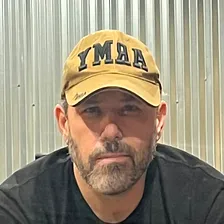
Jay Titus
Founder
- U.S. Army veteran
- CISSP
- Master's in Cybersecurity
- CySA+
- PenTest+
Jay Titus founded Left Hand Security in 2026, after 13 years at Microsoft spanning development, infrastructure and security. He is a U.S. Army veteran.
His engineering runs deep: he has written device drivers and engineered custom operating systems. His security work spans offensive security, red teaming and penetration testing, and he holds the CISSP and a master’s degree in cybersecurity. Through cost optimization, he has saved companies millions in wasted capital.
As an AI security researcher and developer, he has worked with AI startups, and in 2023 he launched his first generative AI startup, for e-commerce. He has seen from the inside what AI makes possible, and what it puts at risk.
I started Left Hand Security to help companies navigate one of the hardest security problems we have ever faced.