
Our Method
Velocity Architecture & Engineering
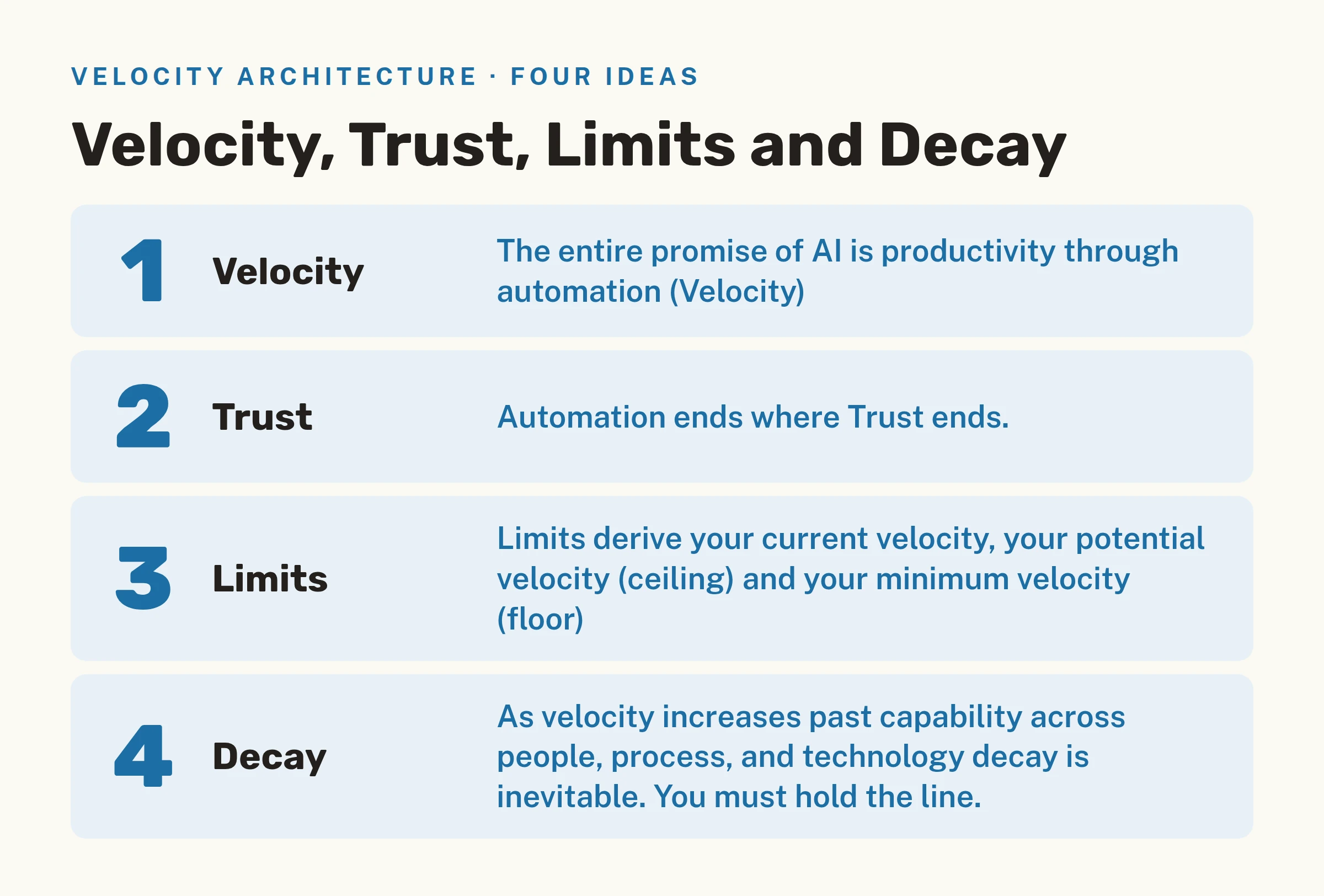
The promise of AI is velocity. The limit of that velocity is trust. Velocity Architecture designs your people, process and technology for maximum velocity, maximum trust and minimal decay. Everything else falls out of it: what to build, where to spend, who stays in the loop, and how fast you can go and how fast you must go.
Our leadership, engineering, assessments and training bring Velocity Architecture to your business and your teams.
AI Is Not a Tooling Problem
It is a general-purpose technology, and it asks for a different way of working.
In the 1880s, factories installed electricity by swapping the steam engine for a motor and keeping everything else the same. For decades it changed almost nothing. The gains came when the factory was redesigned around it.
Most organizations are adopting AI the same way: a better search box, a faster coder, an assistant bolted onto the side. It helps a little, can hurt a lot, and it misses the point in both directions. Most of the opportunity stays on the table, and most of the new risk goes unexamined.
Four Ideas
Velocity, Trust, Limits and Decay
Velocity Architecture starts from four ideas.
The Method
Threat Modeling + Velocity Modeling = Velocity Architecture
Threat Modeling finds the Trust Boundaries. Velocity modeling finds the Trust Limits. A trust boundary is where trust changes, and threat modeling methods like STRIDE name what can go wrong there. A trust limit is how fast the work can go before trust breaks. The two are peers that feed each other, and neither is complete without the other.
Velocity modeling is built to feel familiar to anyone who has threat-modeled a system: walk through the process and ask the same three sets of questions.
Velocity Modeling = PACER, SPEC, & PROBE
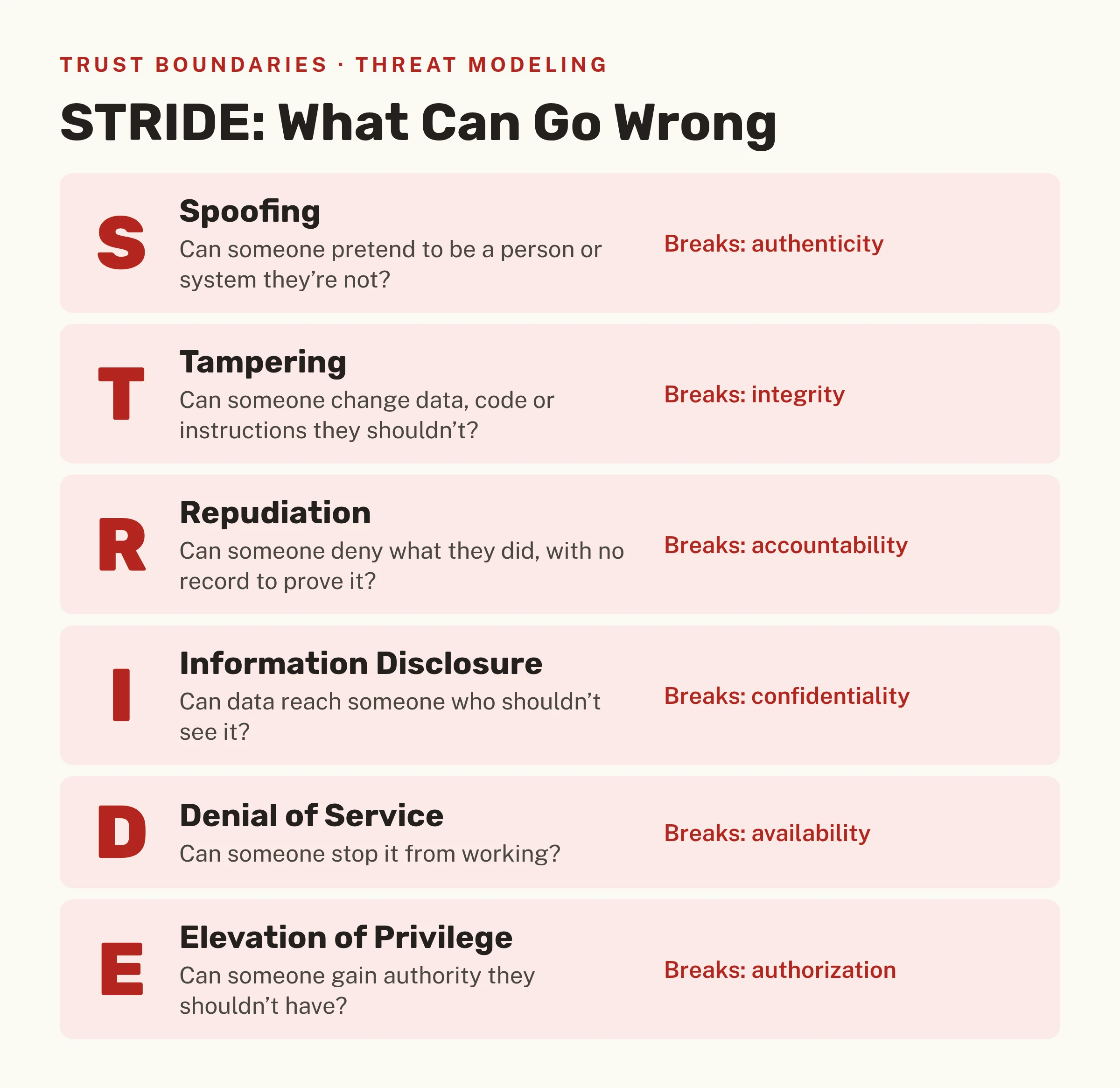
STRIDE
The boundaries: what can go wrong
Spoofing, Tampering, Repudiation, Information Disclosure, Denial of Service and Elevation of Privilege. Finds where trust changes, and the threats that can cross there. This example is illustrative to a security process. STRIDE is not required. We use SAIF as well as other frameworks.
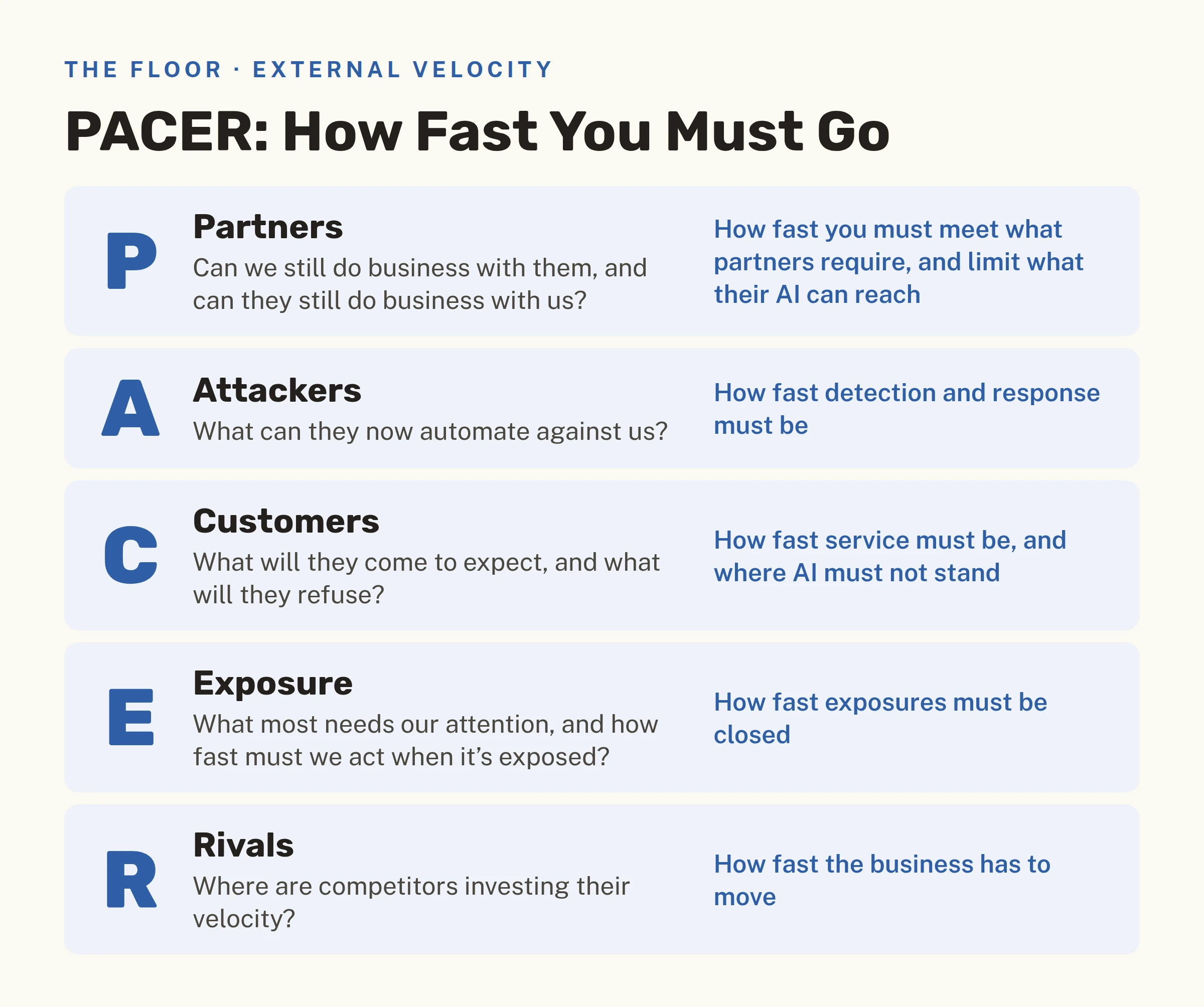
PACER
The floor: how fast you must go
Partners, Attackers, Customers, Exposure and Rivals. The velocity you don't control, and the slowest the business can afford to go. Every company needs it, even one with no AI plans.
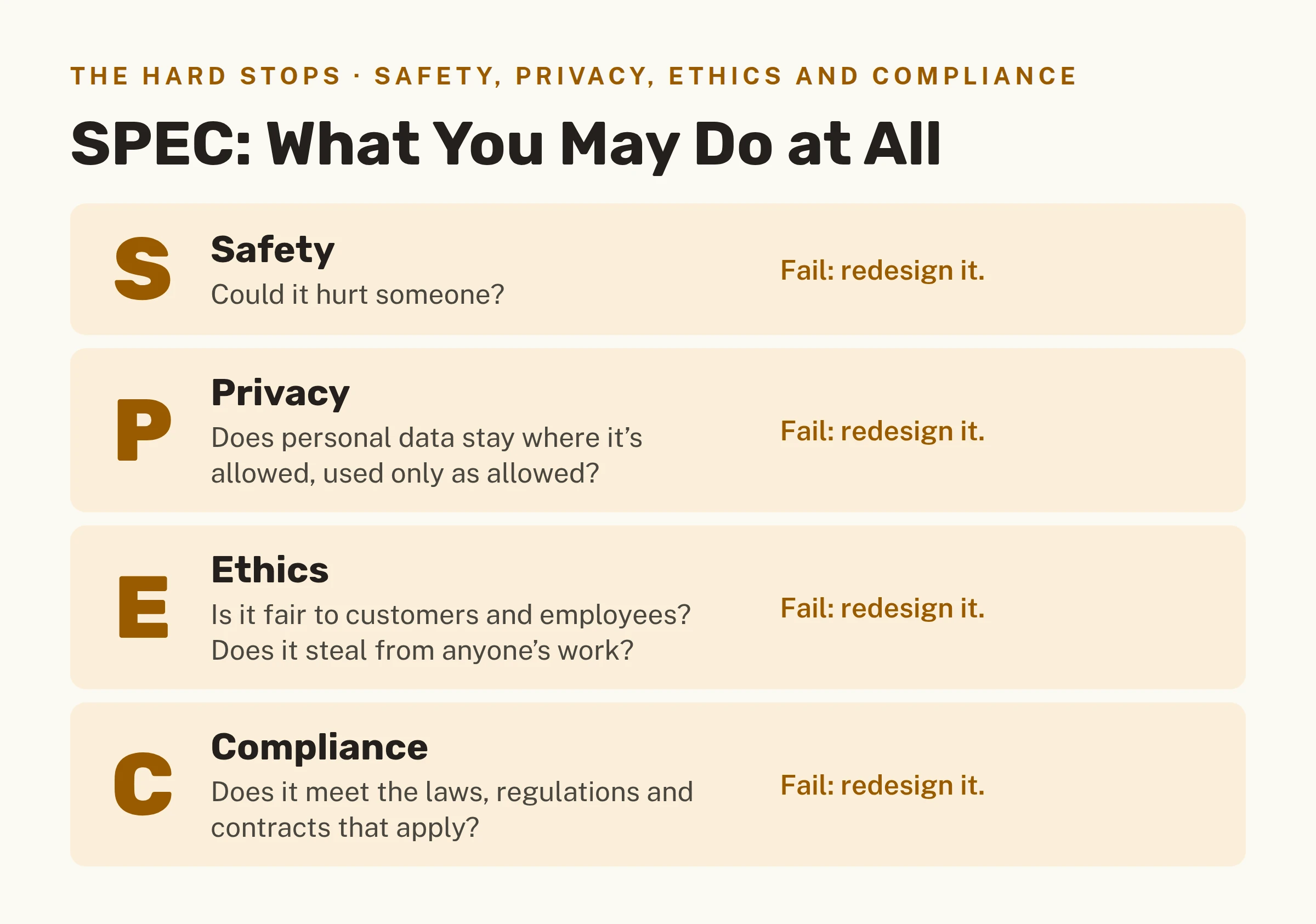
SPEC
The hard stops: what you may do at all
Safety, Privacy, Ethics and Compliance, answered pass or fail, with the rule behind every answer. One fail stops the work, and the only answer is redesign.
PROBE
The ceiling: how fast you can safely go
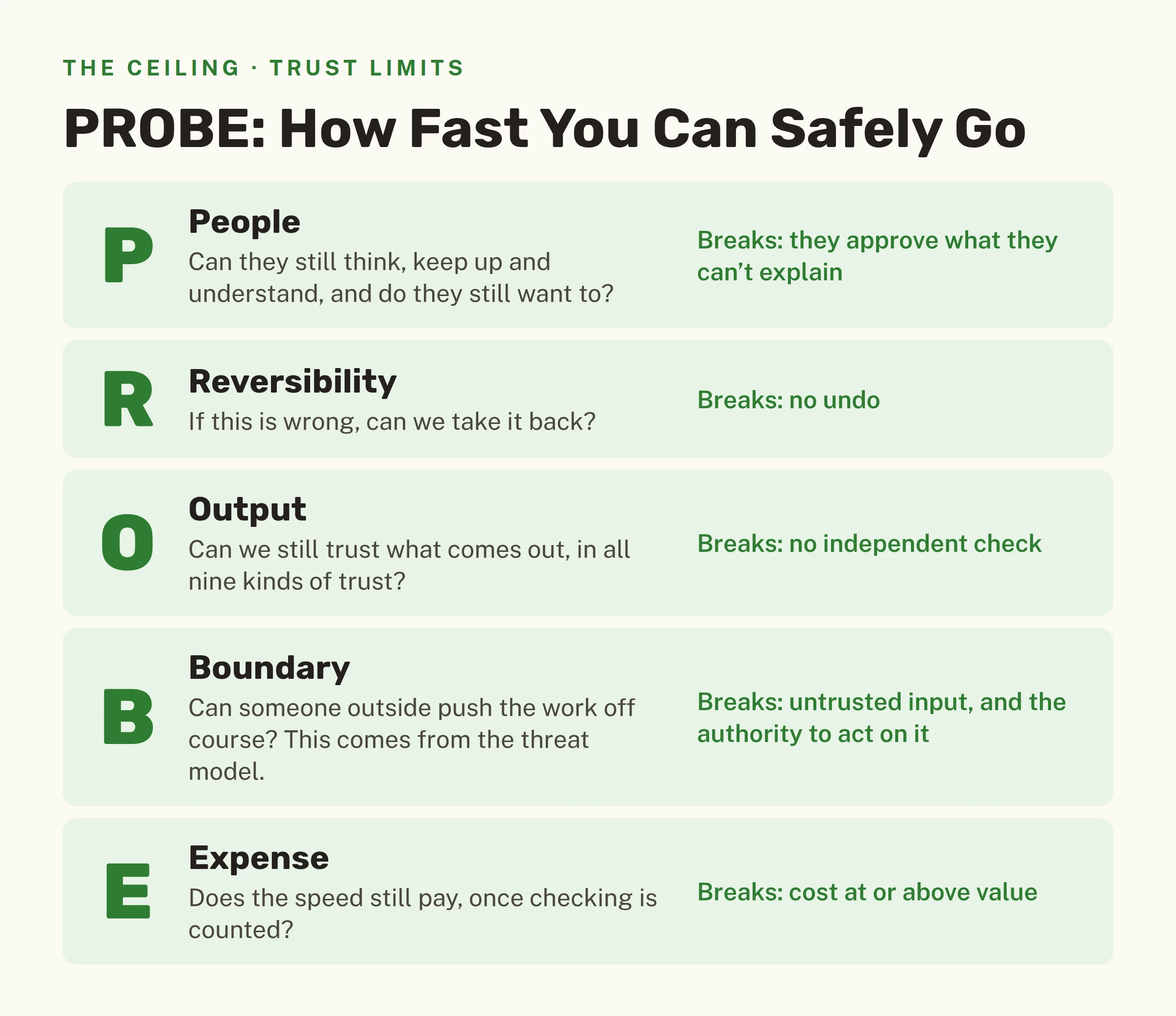
People, Reversibility, Output, Boundary and Expense, starting with whether the people involved can still keep up, understand and own the work. Graded Green, Amber or Red wherever AI speeds up the work; whichever turns Red first is the limit.
Limits Define Requirements
Allow
You can improve velocity here through automation.
Invest
This is where you invest as it is affecting your velocity. Security, development, architecture, monitoring, tooling, training. You get a priority list as well.
Redesign
The limit sits in the path. Split or reorder steps, or have AI write the process instead of being it. There is always more than one way to do something.
Isolate
Trust is low, or someone outside can reach the work. Draw a new trust boundary around it. Does not apply to humans. They don't do well in isolation.
Throttle
The work is safe only if it can't go too far, too fast. Cap its actions, spend or messages. Sometimes the fastest speed isn't the best option.
Human
It can't be undone, or the law requires a person. A named decision of record, with reasons.
What Falls Out
People, Process and Technology
Once the limits are known, most of the decisions a business agonizes over about AI stop being separate debates. They fall out.
People
- Work Worth Doing: people move to the work where their judgment matters most: exceptions, relationships and the functions.
- Skills That Stay Current: each person gets a plan from the Human Learning Reinforcement Framework (HLRF): what their role still needs them to know, practice that keeps it sharp, and a regular check that it holds.
- Measured to Invest, Not to Judge: understanding and engagement are measured to show where training, better tools or a redesign will help. The goal is learning how to work in this new era. The factory is being redesigned. Humans need help as well.
- A Person Owns the Decision: where the law or the stakes call for one, a named person makes the decision of record, with the reasons kept.
Process
- Where to Start, and in What Order: where speed is worth the most, and what has to be built first for it to be safe.
- Checks Before Speed: independent checks, thresholds and throttles are in place before the work speeds up, and the next phase starts only when monitoring shows them holding.
- What Happens When It Goes Wrong: every limit comes with its signal and its brake, decided before the drift.
- Compliance Evidence: SPEC checked throughout, with the working as the audit trail.
- Measured Continuously: each phase moves the limits, so the work is reassessed and the next target set.
Technology
- Requirements Agents Can Build From: every threat, SPEC requirement and limit becomes a requirement with its control, its test and the signal that shows it still works.
- The System Design: where AI goes, where ordinary code is better, and what is walled off.
- Security and Controls: Optimized and evolving security and controls. Tools are a small part of security. Architecture process, and agility are far more important than the false sense of security most tools will give you.
- What you actually need to buy and invest in: each limit is a buying requirement, so vendor and model choices stop being beauty contests.
Ready to Find Your Limits of Trust?
Threat modeling tells you what can go wrong. Velocity modeling tells you what to build, where to spend, who to keep, and how fast you can go.